The Best Baby Puffs, Compared: Why We’d Skip the Rice-Based Ones

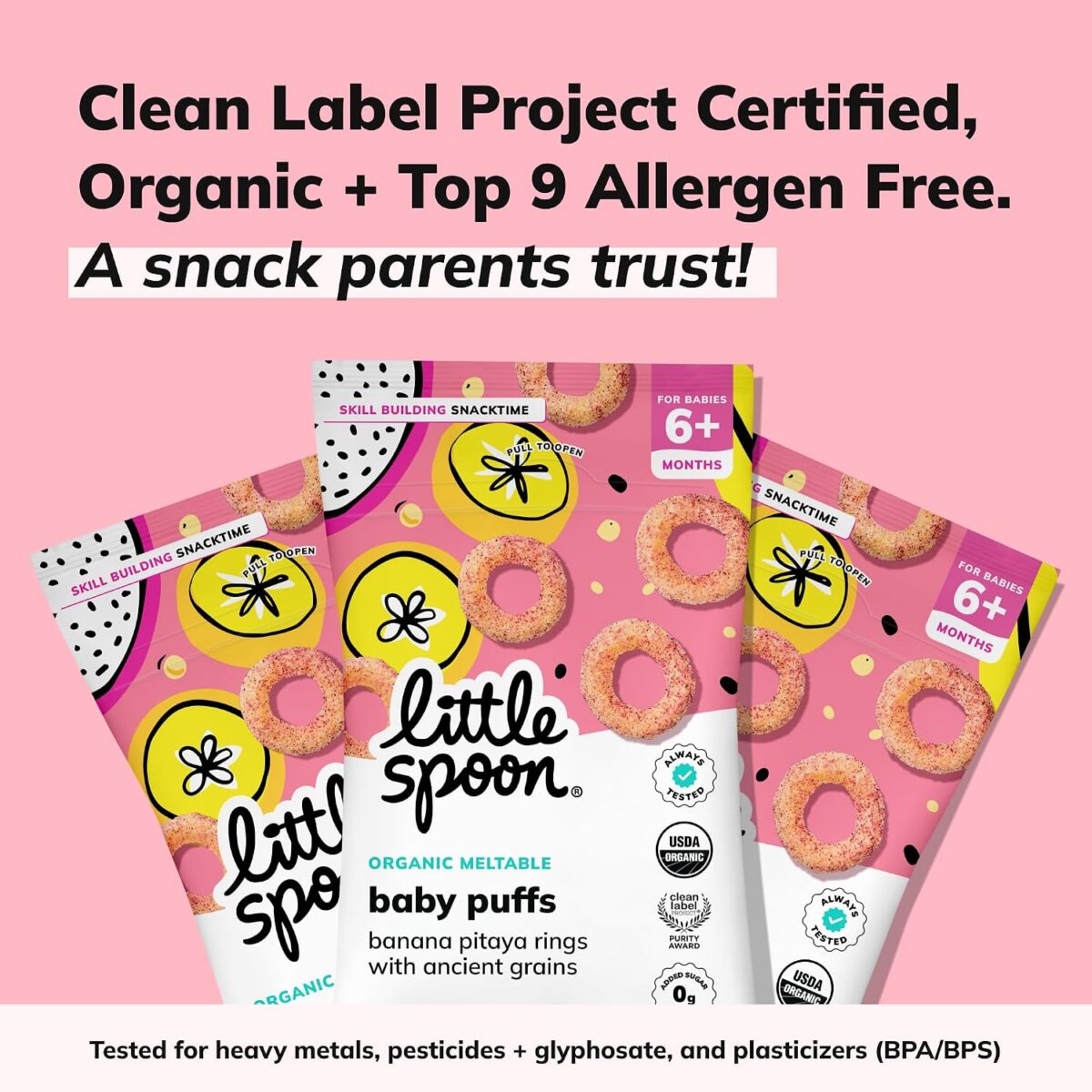
For a lot of families, puffs are the first snack a baby feeds themselves — those little melt-in-the-mouth rings are practically a rite of passage. But “first snack” is exactly why the ingredient list deserves a closer look than we usually give it. We compared the puffs parents reach for most, and one stood out for a reason that’s been on every caregiver’s mind lately.
The rice problem most puffs don’t mention
Here’s the thing that surprised us: most popular baby puffs are built on rice flour. Rice is cheap, puffs well, and dissolves easily — but it’s also the grain most associated with concerns about arsenic and other heavy metals in early foods, which is why a lot of pediatric guidance now nudges parents toward variety beyond rice. Plenty of well-known puffs are rice-first, and some also contain a little added sugar. Once you’re reading for it, the differences between brands get obvious fast.
What we looked for in a better puff
Our checklist was short: no rice, no added sugar, a genuinely short and organic ingredient list, and — ideally — third-party testing that goes beyond the label. That last part matters most for a food designed to be eaten by six-month-olds.
Our winner: Little Spoon Organic Meltable Baby Puffs
Little Spoon’s Banana Pitaya puffs were the clearest yes. They’re made with just six organic ingredients and skip rice entirely — the base is ancient grains like sprouted quinoa and sorghum with organic corn, avocado oil, and real banana and pitaya (dragon fruit) for flavor. There’s 0g added sugar, no seed oils, and no salt. Crucially, they’re Clean Label Project Certified and the brand says every batch is tested for 500+ contaminants, including heavy metals, pesticides, glyphosate, and plasticizers (BPA/BPS). They’re also Top 9 allergen-free, and the melt-in-your-mouth ring shape is built to be gentle on gums while babies practice the pincer grasp.
No rice, 0g added sugar, six organic ingredients, and Clean Label Project Certified — exactly the boxes a first snack should check.Brit+Co Editors
Who they’re for
These are aimed at babies 6+ months who are ready to start self-feeding and practicing that pincer grasp. If the rice-and-heavy-metals conversation has been living in your head, a no-rice puff with third-party testing is an easy way to feel better about the snack your baby is most likely to feed themselves. As always, puffs should be offered to seated, supervised babies who are comfortable with dissolvable textures.