I Tried Every Gut Tea and Probiotic in the Aisle Before Realizing I Was Barely Eating Any Fiber

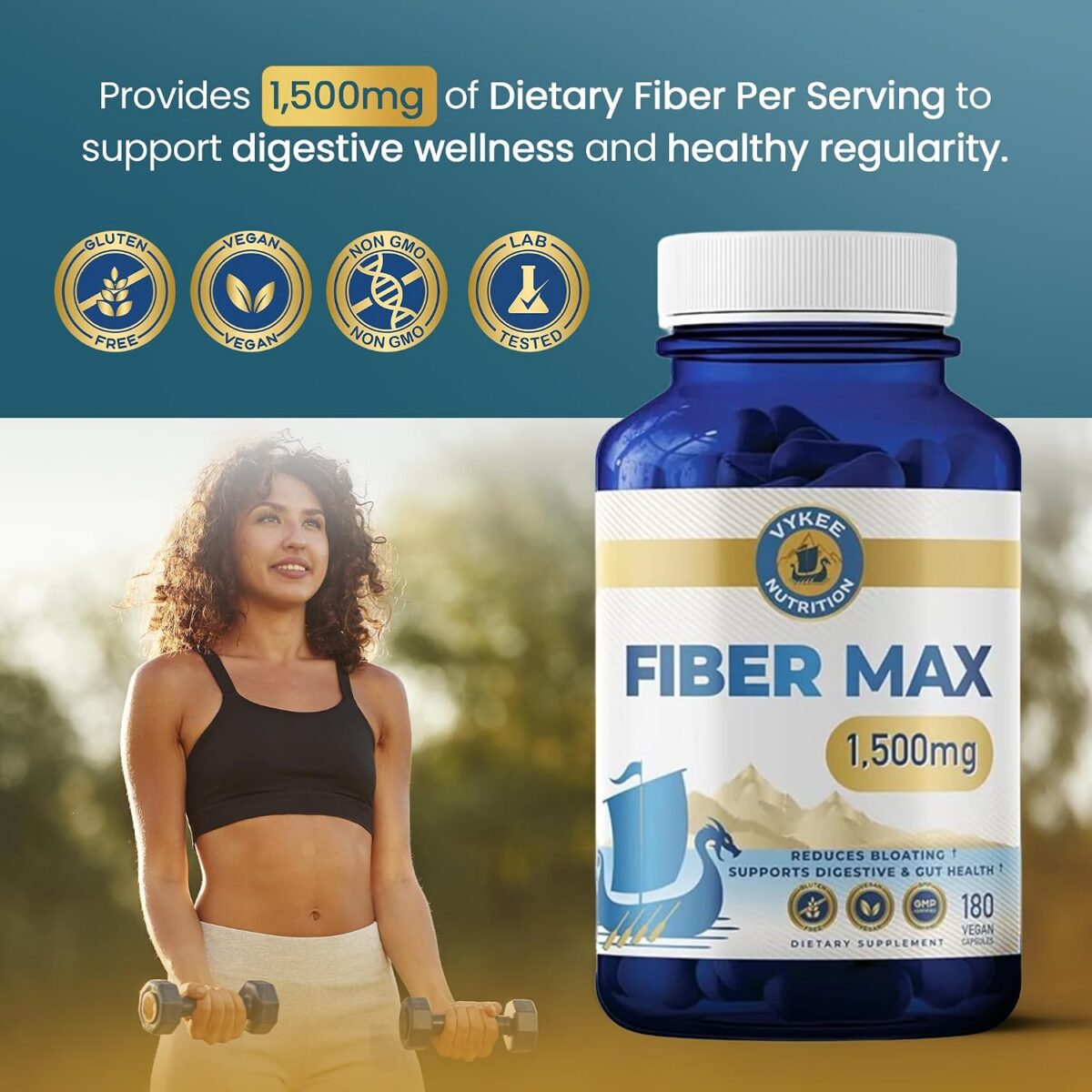
Paid partnership with Vykee Nutrition
There’s a particular flavor of frustration that comes from doing all the “wellness stuff” and still feeling puffy, sluggish, and vaguely off by mid-afternoon. I’d tried the fancy probiotic. The dandelion tea. The kombucha habit I pretended to enjoy. And it wasn’t until I tracked what I actually ate for a week — not to diet, just out of curiosity — that the real gap stared back at me: I was getting maybe a third of the fiber I was supposed to. Not a gut mystery. A fiber math problem.
Wait — this was a fiber thing the whole time?
Turns out most of us are in the same boat. The guidelines put daily fiber at roughly 25 grams for women and 38 for men, and the majority of adults never get close. Fiber is the unglamorous workhorse behind regularity, feeling full after meals, and the general “everything’s moving like it should” baseline your gut runs on. When you’re low, there’s no dramatic alarm — just the low-grade version: irregular, bloated, snacky an hour after lunch. Classic “you might be running short and have no idea” territory.
Why I landed on Vykee’s Fiber Max specifically
I’ll be honest — my first instinct was the giant tub of orange powder everyone’s grandparent has. What stopped me was remembering why I always quit those: the gritty, chalky glass of sludge you choke down and rinse fast before it sets like cement. Vykee takes the capsule route instead, and it’s not just psyllium. Each serving is a four-ingredient blend:
- Psyllium husk (800 mg) — the soluble fiber behind all those classic regularity products; it absorbs water to add bulk
- Aloe vera extract (400 mg, 4:1 concentrate) — a traditional pick for digestive comfort
- Chia (200 mg) and flax (50 mg) — whole-food seed fibers that also bring omega-3s
So it’s psyllium plus the seed fibers I’d otherwise be trying to sprinkle onto everything, in one step — no blender, no gag reflex. The rest of the label read like a green-flag checklist:
- Vegan, gluten-free, non-GMO, no fillers or artificial additives
- Made in GMP-certified US facilities
- 180 capsules per bottle
What it actually does (and what it can’t)
Here’s the honest math, because I’d want a friend to give it to me straight: a 1,500 mg serving is about 1.5 grams of fiber. That’s a top-up, not a replacement for actual fiber-rich meals — no capsule is covering a 25-gram day. Where it earns its place is convenience: an easy add on travel days, restaurant-heavy weeks, or the stretch when your eating is more “surviving” than “meal-prepped.” And it’s a way to get psyllium without the powder ritual. Two non-negotiables I learned fast: take psyllium with a full glass of water, and add any new fiber gradually so your gut can adjust.
Who it’s for
The natural fit is someone who wants a low-effort nudge toward regularity and fullness — because powders are a chore, or because they want psyllium plus seed fibers in one go — and who’s already trying to get most of their fiber from food. A couple of cautions worth taking seriously: concentrated aloe can act as a laxative for some people, and anyone with a digestive condition, trouble swallowing capsules, or who takes medications (fiber can shift how things absorb) should check with a doctor first. Persistent digestive symptoms deserve a real medical look, not a supplement guess.
The verdict
I didn’t overhaul my life. I added one small, no-drama step — a couple of capsules with a big glass of water — and kept working on the actual vegetables. But as a reliable baseline for the “am I even getting enough fiber?” question that nags most of us, it turned out to be the easiest upgrade I’ve made to my routine in a while.
*These statements have not been evaluated by the Food and Drug Administration. This product is not intended to diagnose, treat, cure, or prevent any disease. Results vary.