
 Recommended for you
A gallery wall is already a statement — a curated mix of art, photography, and personality that tells a story at a glance. But a memento wall, coined by Homes & Gardens (love those UK design mags!) takes that idea one step further. Instead of simply displaying beautiful art and photos, a memento wall captures your life in the same way a keepsake box would. Think beyond frames and into memories: objects, fragments, keepsakes, and small artifacts from your travels or otherwise that carry meaning. When designed thoughtfully, a memento wall becomes less like décor and more like a visual autobiography. It's the ultimate trend: personalization that makes your home YOURS.
Here are 7 ways to create a memento wall.
The first shift is mindset.
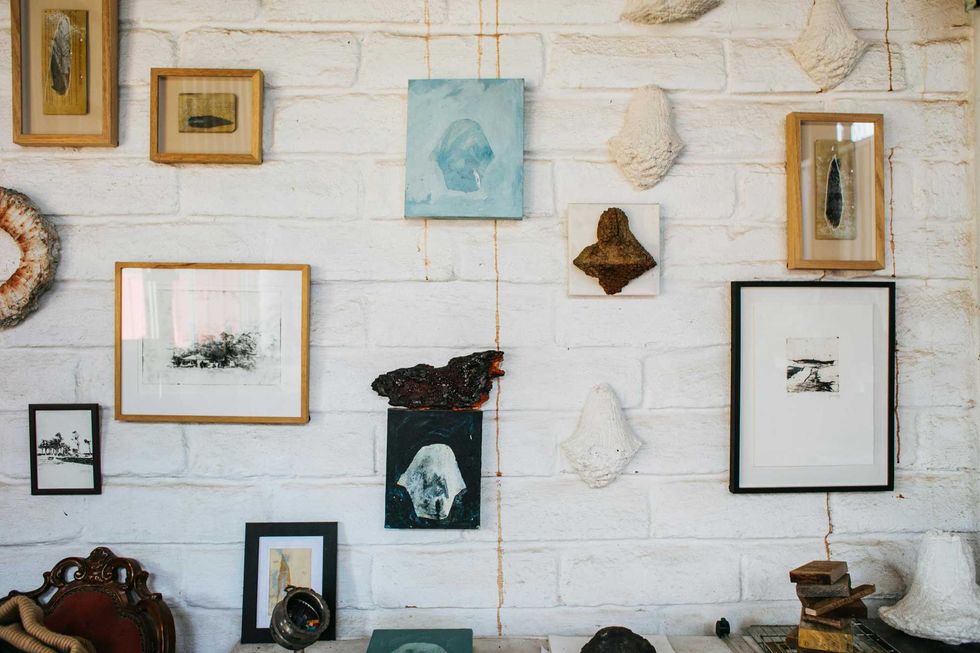
Photo by Rachel Claire
Traditional gallery walls prioritize visual cohesion: matching frames, consistent spacing, a defined color palette. A memento wall, while still intentional, embraces emotional cohesion instead. The pieces don’t have to match, but they do have to matter. Postcards from a favorite trip, a handwritten note, a vintage key, concert tickets, a child’s drawing, a textile scrap — these are items that would normally live tucked away in drawers. Here, they become the focal point.
Start by gathering mementos.

Photo by Alina Matveycheva
Get ready to go down memory lane. Start by gathering without editing. Pull together anything that sparks a memory or feeling. This stage is less about design and more about discovery. Lay everything out on the floor or a large table and look for natural themes. You may notice subtle connections: travel moments, family history, milestones, creative inspirations. These underlying threads will help shape the wall without forcing a rigid structure.
Create a composition.
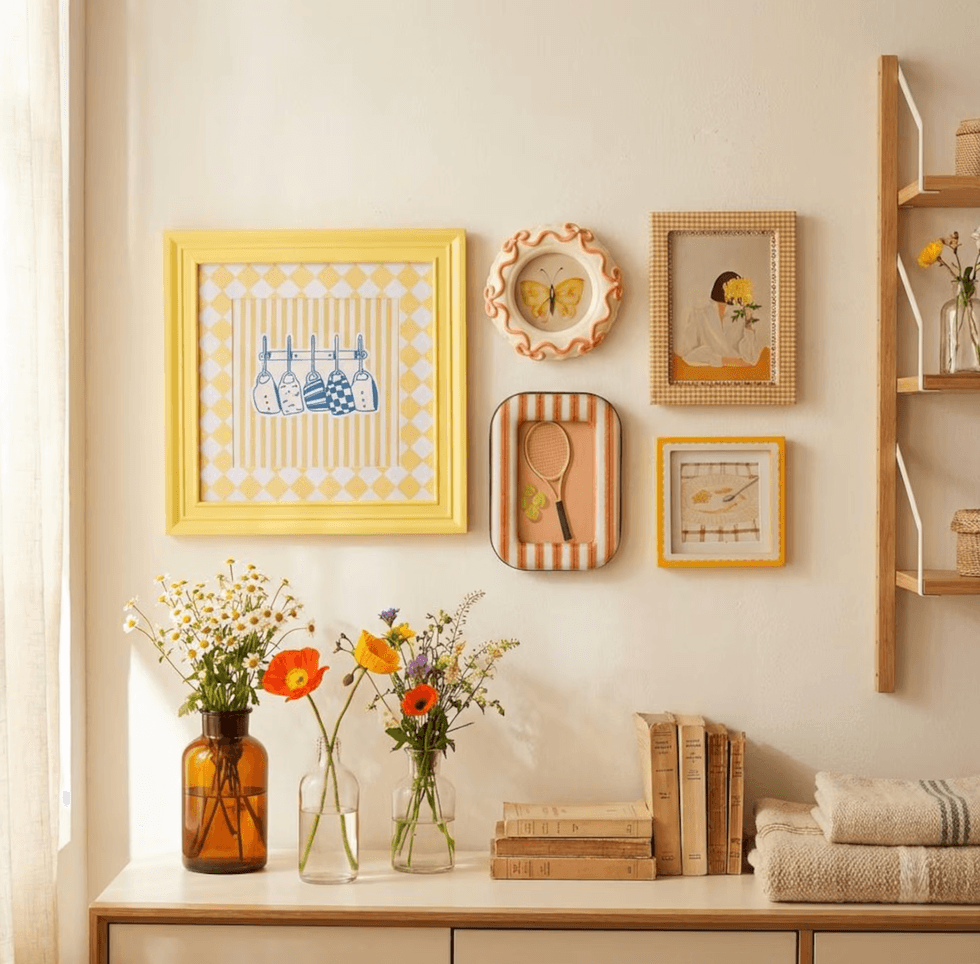
Etsy
While a memento wall is inherently eclectic, it still benefits from visual anchors. Framed pieces — photographs, prints, documents — act as grounding elements that give the eye a place to rest. Interspersed between them, three-dimensional objects add depth and intrigue. Small shadow boxes, floating shelves, or sculptural hooks can help integrate non-flat items without making the display feel cluttered. Even consider a mix of frame styles like these vintage cute photo frames from Etsy.
Don't expect perfection.
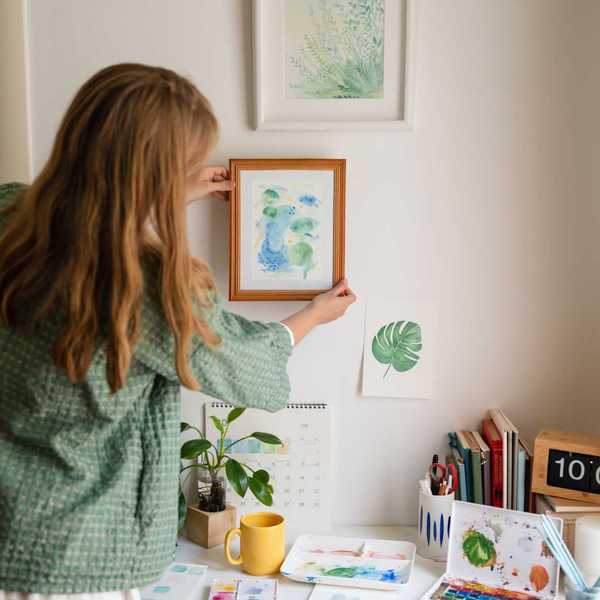
Photo by Leeloo The First
Spacing is where many people hesitate, but perfection is not the goal. Unlike a tightly measured gallery wall, a memento wall feels more organic, almost as if it evolved over time. Vary distances slightly. Let certain pieces breathe while others cluster. This subtle irregularity creates warmth and prevents the wall from feeling overly staged.
Pair contrast materials.
Getty
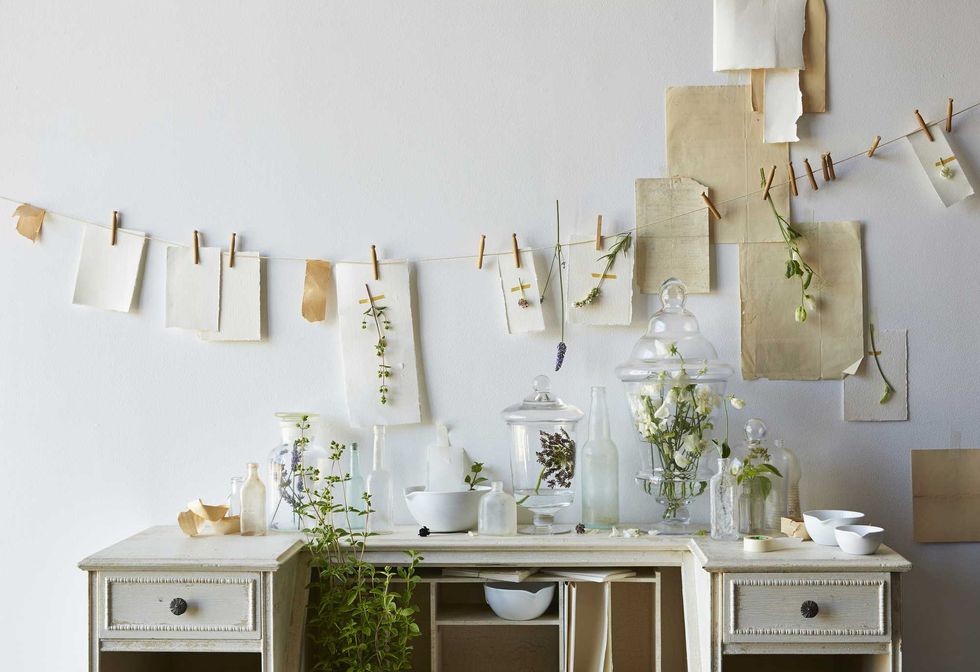
Material contrast plays an important role. Mixing textures — paper, metal, wood, fabric, ceramic — gives the wall richness and dimension. A glossy photo beside a worn postcard or a smooth frame near a raw textile creates visual tension that feels layered and lived-in. The goal is not uniformity but rhythm.
Play with color and shape
Getty
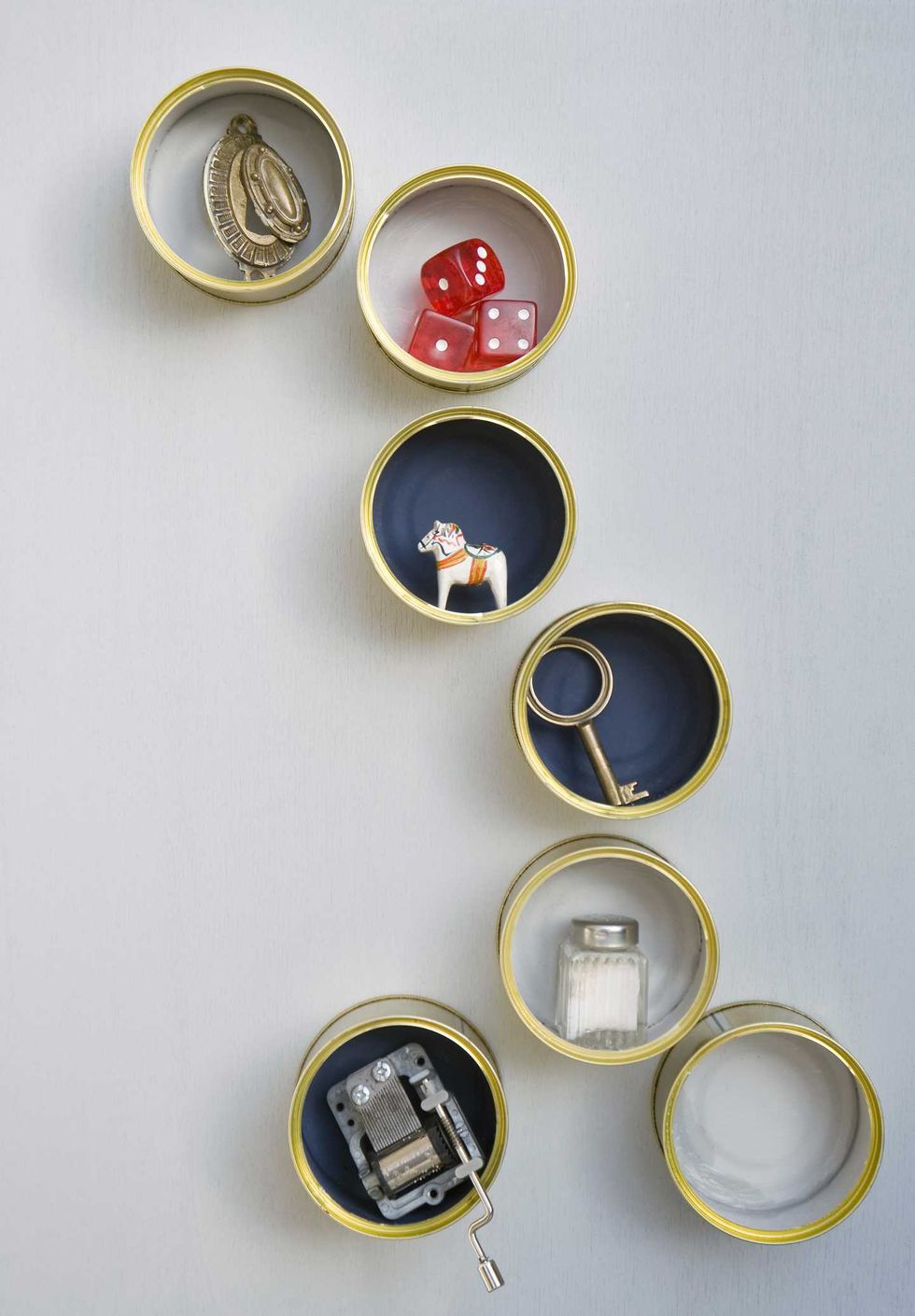
Color can either unify or energize the arrangement. Some memento walls thrive on a neutral backdrop where varied items shine, while others lean into a playful, collected look. If your keepsakes span many hues, consider repeating a few tones throughout the display to create subtle harmony. Even accidental repetition can make the wall feel cohesive.
Leave room to grow.
Getty
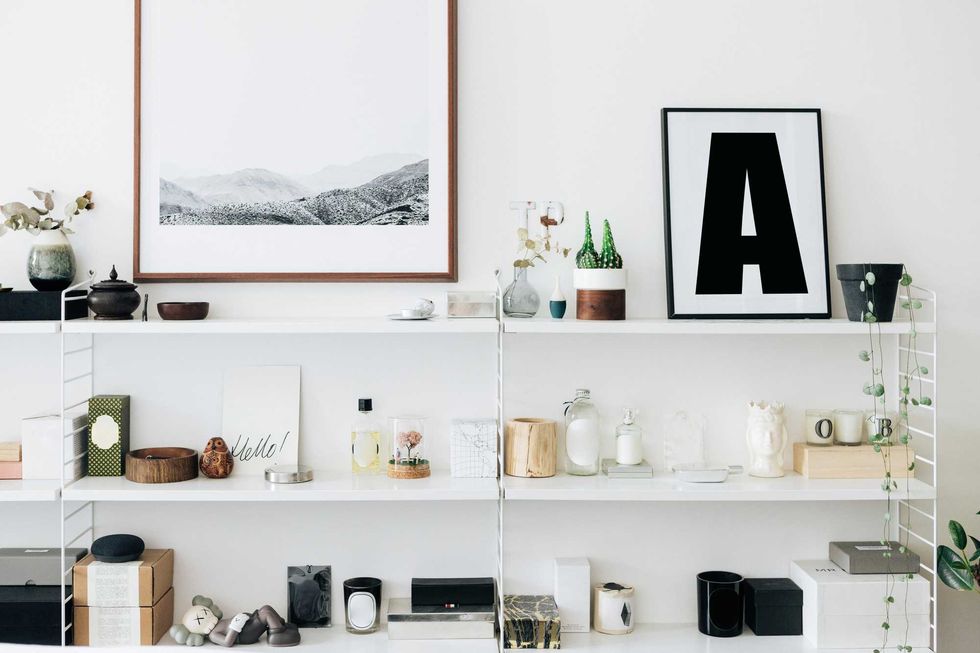
Perhaps the most important principle: leave room for evolution. After all, we ourselves are constantly evolving. A memento wall should never feel finished. It grows with experiences, travels, and moments worth remembering. Swapping, adding, and rearranging keeps the display alive and prevents it from becoming static.
Ultimately, a memento wall transforms memory into design — a daily reminder that the most meaningful design elements are often the ones tied to personal history. These walls tell a story.
Subscribe to our newsletter to discover more home decor trends!
Brit + Co may at times use affiliate links to promote products sold by others, but always offers genuine editorial recommendations.