 Recommended for you
Packing up your new carry-on for a summer vacation is all fun and games until you find yourself staring out at the airport tarmac. Suddenly, the reality of the massive plane ahead sets in, and those pesky, anxiety-ridden thoughts begin to spiral: Are these planes actually safe? How much turbulence am I in for?
These are valid questions, but when left unchecked, anxiety can quickly escalate from worry to a full-blown panic attack — or even the added stress of fearing you’ll become a viral "travel nightmare" on social media. Thankfully, you don't have to navigate these fears alone. Captain Tom Bunn, MSW, LCSW, founder of SOAR, is here to walk you through the science of flying and help you reclaim your calm.
Try these tips to calm your airplane anxiety!
1. Identify Your Triggers (System A vs. System B)
The takeaway: Understand that your brain has two systems. "System A" is logical and knows flying is safe. "System B" is experience-based and often assigns a "negative code" to things like lack of control or inability to escape. Anxiety arises when these two systems conflict.
Do you remember where you were going the first time your airplane anxiety reared its ugly head? My first memory involves my first plane ride to Texas. My family always drove before, but the 10+ hour road trips started taking a toll on everyone. Since I was already familiar with car accidents we'd driven by in the past, my heart was racing as we waited for the plane to take off — if cars could crash, what could happen to airplanes? I'll spare you the details, but one of the flight attendants had to stand by me and help me count to 10 a few times before I calmed down.
If you're wondering where your airplane anxiety stems from too, Captain Bunn says anxiety typically occurs for two reasons. "We have two systems that try to take care of our wants and needs while at the same time keeping us safe. One — let's call it System A — is word-based. We can interface with it consciously. If that were our only system, we could control anxiety with logical thoughts about how safe flying is."
I, for one, would've loved to verbally tell my anxiety to take a hike when I was kid, but it turns out I needed a little more reassurance. "System B operates outside of consciousness because it's experience-based," Captain Bunn says. "After an experience has taken place, System B assigns a code to the experience. A positive experience is assigned a positive code. A negative experience is assigned a negative code," he explains.
Palu Malerba/Pexels
Things get interesting after System B assigns those codes. "The next time that experience presents itself as a possibility, our amygdala reads its code. A positive code will cause good feelings. A negative code will cause bad feelings. Feelings we get when the amygdala reads the code determine whether we go ahead with the experience or back away from it," Captain Bunn says.
Another explanation, according to Captain Bunn, comes straight from neuroscientists. "The neural mechanisms underlying emotional valence are at the interface between perception and action, integrating inputs from the external environment with past experiences to guide the behavior of an organism. Depending on the positive or negative valence assigned to an environmental stimulus, the organism will approach or avoid the source of the stimulus" (via National Library of Medicine).
It's like putting your hand on a hot stove whenever you've never done it before. You may not immediately register the pain, but it eventually comes and you tell yourself you're never doing something like that again. Every neural path and nerve ending knows what will happen if you and wants to avoid feeling that.
2. Recognize That You Can "Update" Your Brain
Getty
The takeaway: You are not stuck with your fear. You can "update" the negative associations in your System B by applying positive experiences to situations your brain currently views as dangerous.
Our anxiety wants to do everything it can to protected us from perceived threats, right? So imagine being in a situation you have no control of, like flying. You know that you're a passenger on your flight, but you're not flying the plane nor are you able to dictate your flight's path.
"In a traumatic experience, we are not in control. Thus, not being in control is assigned a negative code. In a traumatic experience, we are not able to escape. Not being able to escape is also assigned a negative code. As we go through life and have traumatic experiences, the negative codes assigned to no control and to no escape get more and more negative," says Captain Bunn.
He shares that once enough stress hormones are released, they can trigger panic no matter how safe we are. "For example, we could panic when in an elevator, getting a MRI scan, or boarding an airliner," he explains.
When you break this down, it looks like this:
- Our System A knows flying is safe enough to do.
- If flying doesn’t feel safe, it is because of System B. To feel safe, we need to update System B.
3. Manage Your Media Consumption
Getty
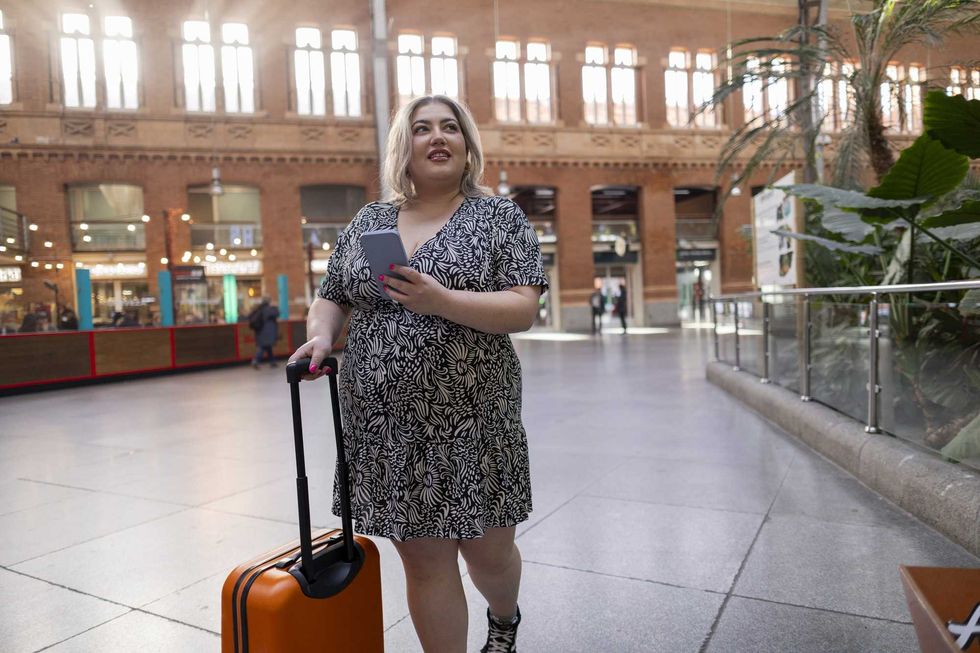
The takeaway: Captain Bunn warns that consuming news about rare or traumatic aviation events can create "vicarious experiences" that assign negative valence to flying. Limit your focus on these stories, as they are not representative of the 100,000 daily flights that occur without incident.
Having anxious thoughts can make you feel like things will never change, but Captain Bunn knows that's not true. He stressed that even an imaginary experience or a memory can "update" System B — AKA trick your brain into thinking everything really is gonna be okay. "That is what we do in the SOAR program using the strengthening exercise. We apply a positive experience to situations System B regards as negative," he says.
Though negative codes can be assigned by System B, not every negative feeling is a result of something traumatic. "Some negative codes comes from vicarious experiences. For example, when the news tells you about a terrifying experience on a plane, as you imagine what those people felt, your vicarious experience assigns a negative valence code to flying," Captain Bunn says.
He believes you need to monitor how much news you pay attention to so that you're not making fear-based decisions. One-off experiences reported in the media aren't emblematic of the entire flying experience, so there's no use obsessing over one story about bad turbulence. According to Trip.com, there are approximately 100,000 flights a day — that means the one flight you may have heard about was literally 1 in 100,000 flights just that day. More often then not, flights are easy, breezy, and unremarkable.
4. Put Turbulence Into Perspective
Getty
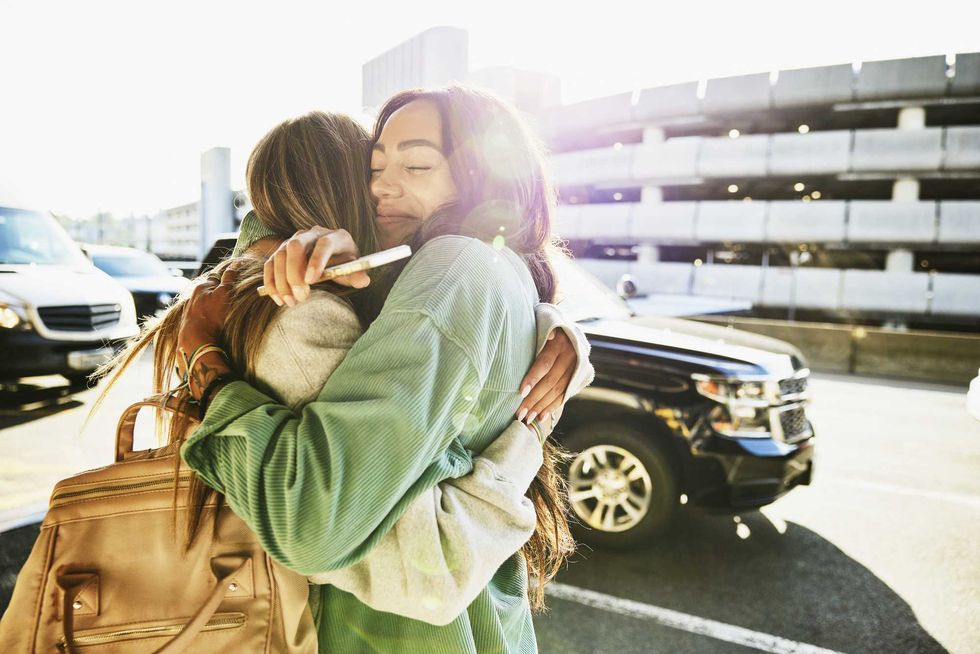
The takeaway: Understand that severe turbulence is extremely rare. Aviation history shows that turbulence is almost never a cause of a commercial jetliner crashing. Turbulence: Everything You Need to Know explains why, structurally, it is so difficult for turbulence to bring down a plane. Even after a 30-year career, Captain Bunn reported experiencing only 30 seconds of severe turbulence.
If you still think there's more to worry about, here's the breakdown from the Federal Aviation Administration of the injuries turbulence has caused in recent years:
- How many passengers were injured due to turbulence last year in the U.S.? 3.
- How many passengers were injured due to turbulence in 2022 in the U.S.? 4
- How many passengers were injured due to turbulence in 2021 in the U.S.? 1.
- How many passengers were injured due to turbulence in 2020 in the U.S.? 0.
Knowing this, Captain Bunn wants us to ask ourselves an important question. "How must time should we think about turbulence injury? How much time should the media devote to turbulence injury?"
He knows that the media is reporting that turbulence is getting worse based on factors like climate change, but he also wants you to understand that the odds you'll personally be injured because of it are slim.
5. Utilize the SOAR Strengthening Exercise
Juliia Abramova/Pexels
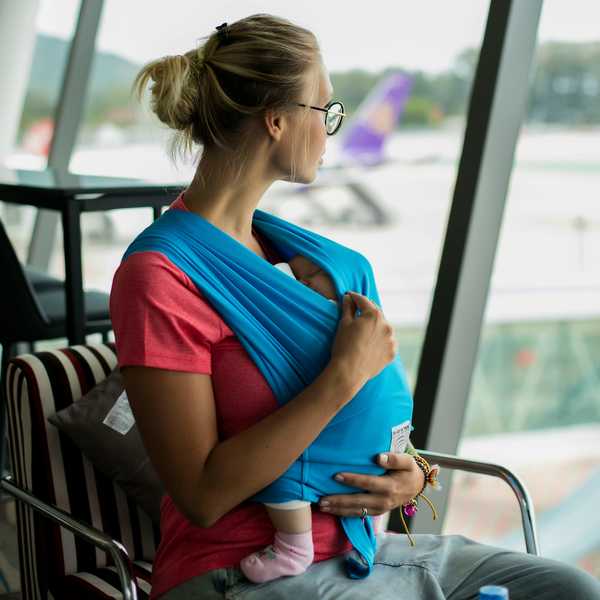
The takeaway: Use the SOAR Strengthening Exercise to consciously shift your brain's response to flight. This involves replacing negative thoughts or "codes" with positive anchors—such as the memory of a friend’s face, the tone of a calming voice, or the sensation of touch—to help you feel safe.
Captain Bunn says, "The valence codes associated with turbulence need to be shifted from negative to positive. This is where the SOAR Strengthening Exercise comes in. To update System B, we replace the negative code with positive code from a friend’s face, voice quality, and touch."
6. Practice Grounding Techniques
Getty
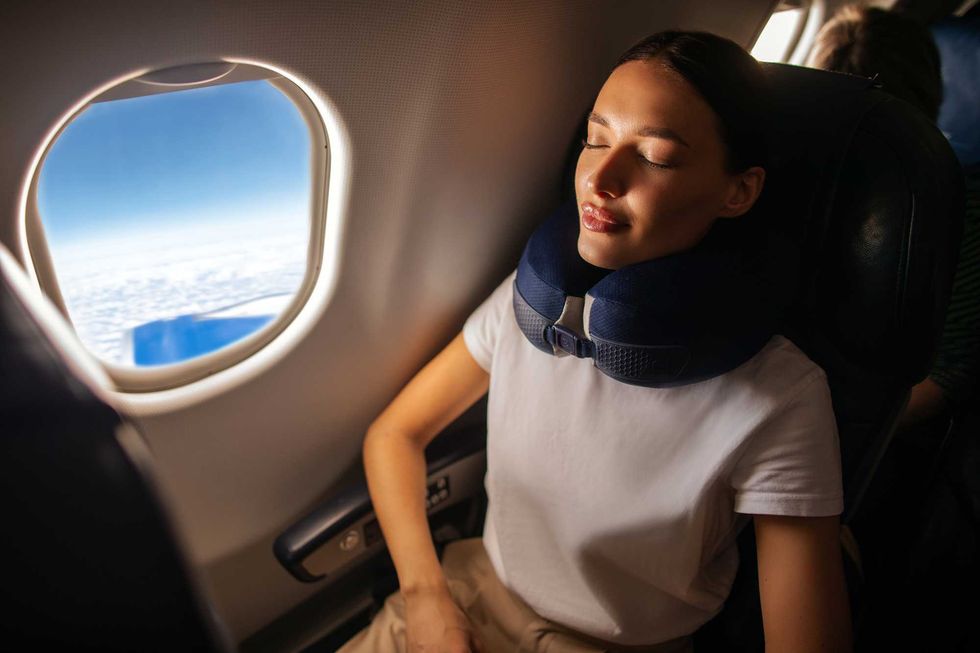
The takeaway: If you feel anxious, use grounding techniques to shift your focus away from the anxiety and back to the present moment. By intentionally becoming aware of things you can see, hear, smell, and touch, you can reframe your perspective and significantly improve your comfort during the flight. Breathing techniques also help.
This speaks to a grounding technique I learned in therapy. It's easy to focus on potential negative outcomes, but we can shift our perspective by becoming aware of things we can see, touch, smell, hear, etc. In reframing your thinking, you can shape your experience and have a better overall flight.
Looking for more travel tips? Be sure to follow us on Facebook for more!
This post has been updated.